

 Europe | €
 Deutschland | €
 Italy | €
 Polska | zł
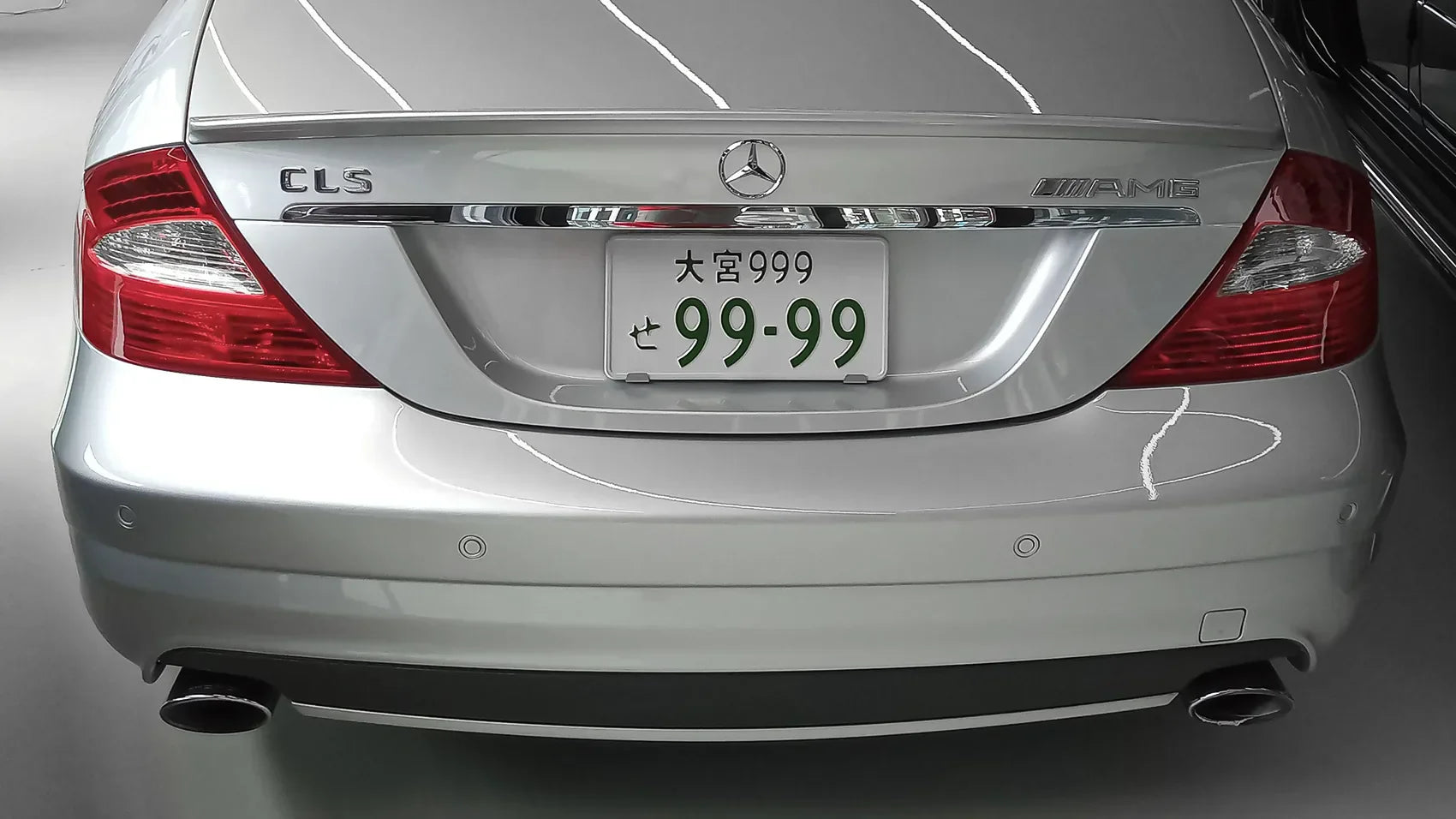
Soft99 comes from Japan, and we love highlighting that fact at every turn! It's a country full of fascinating quirks that can seem quite foreign from a European perspective. Japanese number plates are one such curiosity – so different from anything you'd encounter on the Old Continent. How do you read them? What are the four forbidden symbols that can never appear on a plate? And how do you look after them the Japanese way? We have the answers!
Japanese number plates have always caught the eye, and ever since the latest Forza Horizon – the enormously popular racing game – was set in Japan, more and more people have been wondering what the mysterious characters and numbers on them actually mean. In Europe, they're a popular decoration among JDM fans, but also a detail-rich talking point for those in the know.

As everywhere in the world, Japanese number plates have been designed to allow easy identification of key information about a vehicle and its purpose. To begin with, a few of the most distinctive elements:
- The name of the issuing office: This is typically 2 or 3 kanji characters indicating the region of the office that issued the plate. In the case of the Mercedes CLS in the main photo, this is 大宮 – Ōmiya, a district of the city of Saitama. The blue Honda in the photo above, on the other hand, comes from 足立 – Adachi, one of the northern districts of Tokyo.
- The vehicle classification code: The top line of the plate also contains a classification code beginning with a digit from 0 to 9. Each digit indicates a specific vehicle category. For example, passenger cars with an engine displacement of up to 2,000 cc receive plates from the 5 series, while those with larger engines are assigned the 3 series. This system allows for quick identification of different vehicle types.
- The hiragana character: Below the classification code sits a single character from the hiragana syllabary, used as a unique identifier describing the vehicle category (civilian, commercial, military, etc.). This symbol was introduced to plates in 1955.
- The serial number: The lower section of the plate contains a four-digit serial number, which may be randomly assigned or chosen by the vehicle owner, provided it is available.
The earliest types of number plates identified the type of vehicle using a single digit. Significant changes came in 1998, when Japan transitioned to the current format, adding the issuing office's location alongside the three-digit vehicle classification code we see today.
From 2010, additional special-colour plate variants were introduced, available to order for an extra fee. These options allow vehicle owners greater personalisation, responding to a growing demand for standing out from the crowd – including in the world of motoring. That said, it's far from the only way to be unique on Japan's roads.
Personalised plates in Japan?
Absolutely! The 1998 Number Plate Act also introduced the option to order plates with personally chosen characters – for an additional fee, of course. Personalised plates in Japan differ significantly from those familiar in Europe, where short words are typical – in Japan, it's all about numbers. Which means typically Asian numerology comes into play.

Japanese drivers use numbers on personalised plates to encode meaningful dates, favourite numbers, and even clever wordplay that the Japanese language lends itself to wonderfully. For example, the number 59-63 can be read as "go ku ro san" – ご苦労さん, an expression commonly used to say "good work." Another example is 11-92, read as "i i ku ni" (いい国), meaning "good country" – a popular choice among Japanese patriots!
The same logic applies to 2525 – read as "ni ko ni ko", an onomatopoeia for... smiling. Eights are considered lucky numbers, best of all in their most auspicious configurations such as 88-88 or 80-08, while the worst combination to land is 4989, read as shiku hakku – a Buddhist term for the eight kinds of suffering.
Also worth mentioning are the recently introduced special plates made available for purchase by individual prefectures. Following the example of the varied plates seen in the United States, Japan too now has plates that reflect local colours, landmarks and nature.

These two plates will tell any Japanese person at a glance where the vehicle has come from. In the upper left is a plate from Shiga Prefecture, which anyone familiar with Japanese geography will immediately associate with Lake Biwa – Japan's largest lake – whose surface adorns the special plate.
The motif on the second plate needs no introduction. It's Japan's most iconic symbol: Mount Fuji. As the mountain straddles two prefectures – Shizuoka and Yamanashi – both use the image of Fujisan (as the dormant volcano is known in Japanese) on their plates. The version shown here is from Shizuoka.
It's worth mentioning a curiosity unique in the world: in 1970, Japan introduced illuminated plates known as "jikō-shiki." On these plates, the characters are made from a translucent material and can be backlit, significantly improving their visibility at night. The solution is particularly popular among owners of vehicles used after dark, such as taxis and delivery lorries.
Colours and their functions – easy vehicle identification
Colour also plays a key role in identifying the type of vehicle – a practical solution that allows private, commercial and specialist vehicles to be distinguished at a glance. Especially useful in Japan, where there's no shortage of unique arrangements you simply wouldn't encounter in the West!
- Private vehicles: The most common plates feature a white background with green characters. These are used for passenger cars and certain motorcycles with larger engine capacities.
- Commercial vehicles: For vehicles used for commercial purposes, such as lorries and taxis, the colour scheme is reversed – a green background with white characters.
- Kei cars (light vehicles): Japan has a strong fondness for kei cars – small, light vehicles with compact engines. Their plates feature a yellow background with black characters for private use, and the reverse colour scheme for commercial vehicles.

In addition, special plates – such as those for diplomatic or military vehicles – carry distinct markings, including a red background with white characters, or specific symbols such as Y for vehicles belonging to United States military personnel stationed in Japan.
Some vehicles in Japan use plates that differ in appearance from the standard format. Diplomatic vehicles are a prime example – instead of the usual markings, they carry distinctive symbols such as "外" (gaikoku), indicating their international status.
Japanese drivers wishing to travel beyond the country's borders – no easy feat in an island nation, but not impossible – must be prepared for a trip to the authorities. Japanese plates are not valid for international travel, so in order to legalise a trip abroad, the vehicle owner must apply for a special plate bearing Latin characters assigned to the issuing office.
Also noteworthy are vehicles belonging to the Imperial Family, which are entirely exempt from the requirement to carry number plates – one of the very few exceptions in Japan's vehicle registration legislation.
Characters that can never appear on a plate – taboo symbols!
Japan's uniquely meticulous attention to detail extends even to number plates. Specifically, there are hiragana syllabary symbols – the ones that appear before the large digits – that have been rejected as identifiers due to their pronunciation or meaning, and therefore never appear on Japanese plates. Which symbols are we talking about?
Firstly, in Japanese, the symbol "o" ( お ) looks similar to the symbol "a" ( あ ). Because the two characters are difficult to tell apart, they cannot be used to effectively identify vehicles and their owners when traffic violations occur. The same applies to the syllable "wo" ( を ), which sounds very similar to "o."
The syllable "shi" ( し ) is not used because it sounds identical to the word for "death," making it considered unlucky.
The syllable "he" ( へ ) also never makes it onto a number plate, as it is associated with... flatulence! It's a popular onomatopoeia in manga for that particular embarrassing act. It also sounds similar to the letter "E."
Finally, the syllable "n" ( ん ) is not used because its nasal quality makes it difficult to pronounce clearly and hear correctly over the phone – a particular problem when reporting road incidents by telephone.
How to clean and protect a number plate from dirt?
A clean plate is a readable plate! If we care about keeping our car clean, there's no reason not to give a little attention to the number plate too. It's worth including it in your regular car wash routine, and every now and then removing it from its frame for a proper clean and protective treatment. Many car care enthusiasts apply the same products to their metal number plates as they use on their paintwork.
For this purpose, we recommend Fusso Coat F7 – the powerful Fusso wax in liquid form. Using the handy applicator included in the packaging, you can effortlessly apply a water and dirt-repellent coating that will keep your plate looking clean for up to 7 months.